 Lazy Intellectuals
Jonathan of Roots of Orthodoxy, the Creator Critics Call a Grifter: “I Did This as a Labor of Love”
“I did this as a labor of love. In fact, I lost money by doing this project.” He built one of the biggest Orthodox Christian pages on social media, then decided the Catholic Church was the fullness of the faith. He told Lazy Intellectuals how a self-taught Stoic who wanted to prove Christianity wrong ended up in the middle of an online fight.
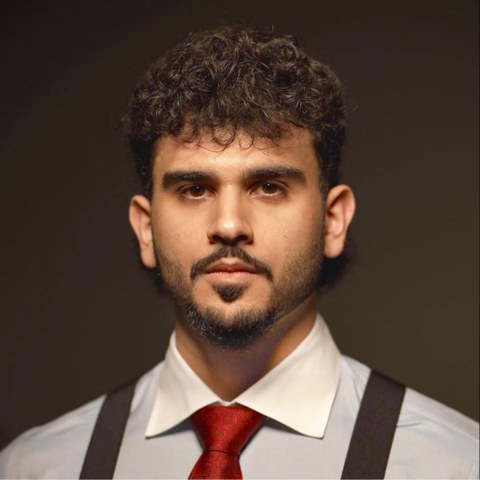
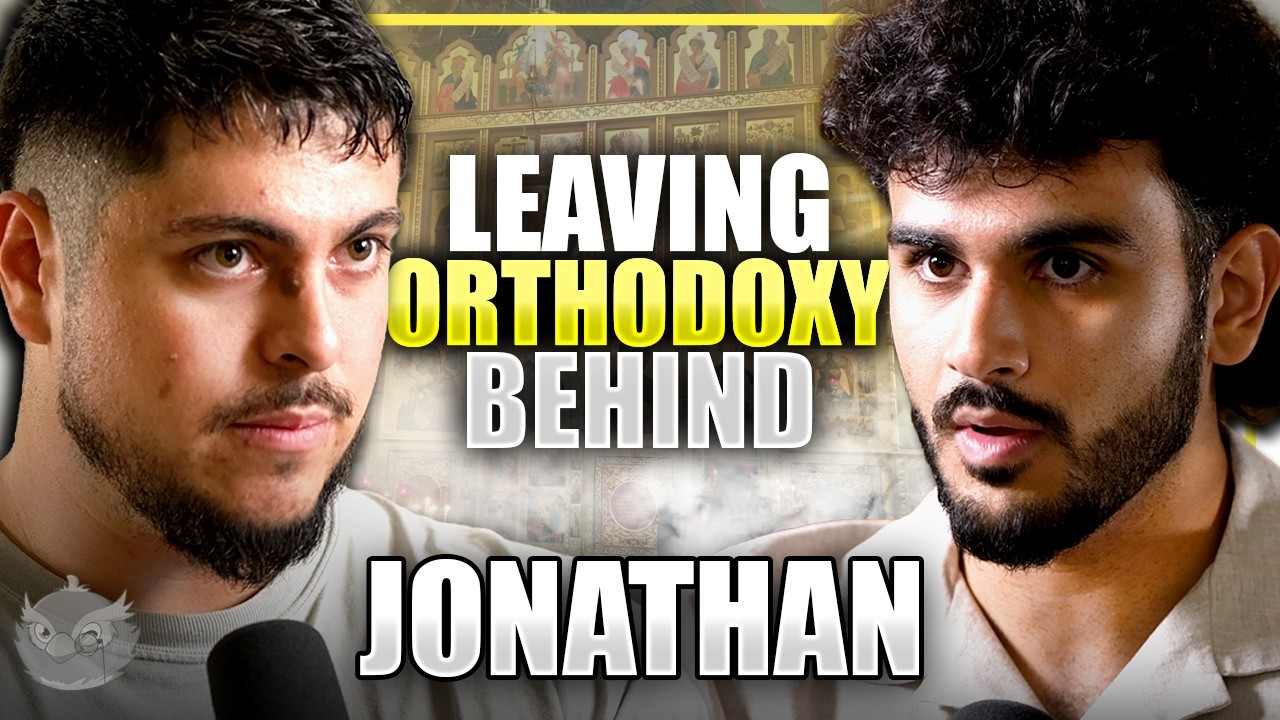
Jonathan grew up in Los Angeles in a family from Mexico, where, as he put it, everybody is Catholic. He prayed the rosary, said his prayers before bed and went to Mass on Sundays. None of it reached him. “I didn't even know that Christ was the object of our worship,” he said. “It was really that much of a disconnect.”
He did not leave the faith so much as drift out of it. “It's not so much that I left the faith,” he said. “It's so much that I was never truly invested in it.” Years later he would become the face of Roots of Orthodoxy, one of the pages most responsible for introducing Americans to Eastern Orthodox Christianity online. Then he became convinced the Catholic Church was right after all, and some of his old audience started calling him Christianity's biggest grifter. We have known each other for a while, and I wanted him to tell the whole story himself.
From Think and Grow Rich to Marcus Aurelius
When Jonathan got into business in 2019, he read the books everyone in sales is told to read. Napoleon Hill's Think and Grow Rich describes an impersonal force Hill calls “infinite intelligence” that anyone can tap into. Rhonda Byrne's The Secret sells the idea of manifesting your own reality. Both pulled him toward New Age spirituality, and both left him with the same problem. “You don't have an objective measure for morality,” he said. He believed in good and evil, and a force that could be used for either was not enough.
So he moved on to the Stoics: Marcus Aurelius, Seneca, Epictetus. What struck him was the emperor who could have had anything and chose discipline instead. “Here's a man who is denying himself because he wants to live a virtuous life,” he said. Christianity, by comparison, looked shallow to him. He knew it mainly through Protestant friends whose worship seemed to be about feelings. “That's not deep,” he remembers thinking. “Marcus Aurelius is deep.”
“Who is this man who speaks with such authority?”
The turn came from his friend Alex, the Catholic apologist known online as Voice of Reason. One night Alex and another friend took Jonathan's worldview apart, laughing at him as they went. He got angry. “I'm going to buy a Bible,” he told them. “I'm going to read it, and I'm going to prove to you guys that you are wrong, that Jesus Christ isn't who you guys claim he is.”
He started with the Gospels and texted them photos of passages he thought proved Jesus was only human. They were patient. The more he read Matthew, the more he found himself in the place of the Pharisees. “Who is this man who speaks with such authority?” he said. “I didn't know Christianity was as deep.” Alex pointed him to Thomas Aquinas, then took him to a Byzantine Rite Catholic church. “It was really that eastern expression that really drew me to the faith,” Jonathan said. Asking where that tradition came from led him to an Orthodox church, “and I absolutely fall in love with it.”
“I did this as a labor of love. In fact, I lost money by doing this project.”— Jonathan, Roots of Orthodoxy
Three years with the Orthodox
Jonathan's background is social media marketing. He saw a way to learn about Orthodoxy and share it at the same time. “I know I can help the Orthodox Church be seen in the West,” he said. He began interviewing priests on camera, and Roots of Orthodoxy grew into a large platform. He says it was a three-year investigation, with the question of which church was true left open the whole time.
So what does he make of the grifter label? “It doesn't really bother me because the people whose opinions I respect never said that,” he said. He paid for the travel and production himself. “I did this as a labor of love. In fact, I lost money by doing this project because I invested my own personal money.” And he turns the accusation around. Some 30 priests by his rough count, plus bishops and metropolitans, sat down with him knowing why he was there. “If it's a grift, what you're admitting to me is that your priests are dumb.”
He believes the real objection is his friendship with Alex, whose apologetics often target Orthodox claims. Critics see a conflict of interest. Jonathan sees two Christians, and notes that he has left the page untouched. “Roots of Orthodoxy is still up as is,” he said. “If people want to be edified by the content, may it be blessed.”
“The fullness of the faith”
At the end of those three years, Jonathan landed in the Catholic Church. “I discovered after three years that it is the fullness of the faith,” he said, “and now I'm going to dedicate my time bringing people to the fullness of the faith.” He no longer attends Orthodox services. He still calls an Orthodox church his favorite place in the world, but he cannot receive communion there. “I can go to the Orthodox Church to be in the presence of the Lord, but I cannot commune there,” he said. These days he worships at the Byzantine Rite liturgy and the Traditional Latin Mass.
I pushed him on the churches that split earliest, the Coptic Orthodox and my own Assyrian Church of the East. He does not back down on his main claim. “I really do think that the Catholic Church is the one true church,” he said. But he does not call the other apostolic churches false. Their sacraments and worship are real, he said. “I would just go as far as saying it's not the fullness.”
Witness over argument
What would he tell a Christian talking to a nonbeliever? Meet them where they are, ask questions, and don't be condescending. He remembers why he walked away as a young man. While volunteering, he attended a Protestant service where the pastor preached “once saved, always saved.” When Jonathan pushed back, the pastor tried to make an example of him. “Jonathan, I can kill somebody right now, and I'm still going to heaven,” Jonathan recalls him saying. His reaction: “There's no way Christianity is true. This is a silly faith.”
“Be humble,” he said now. “Recognize you're not better than them.” He thinks the way Christians live persuades more people than any proof. “I think the witness of Christianity is the stronger factor than argumentation.” He learned that at home. Through the years when he mocked the faith and tried to talk her out of going to Mass, his wife kept going. “My wife has always held it down,” he said. It was her example, he says, that finally humbled him: “I thought I was so smart because of stoicism and all this nonsense.”
He has daughters and a new son, and he is quick to say he is “still a work in progress.” But the habits are changing, and so is the reason behind them. He now has a reason not to do the things he used to do, he said: he is trying to be a Christian.
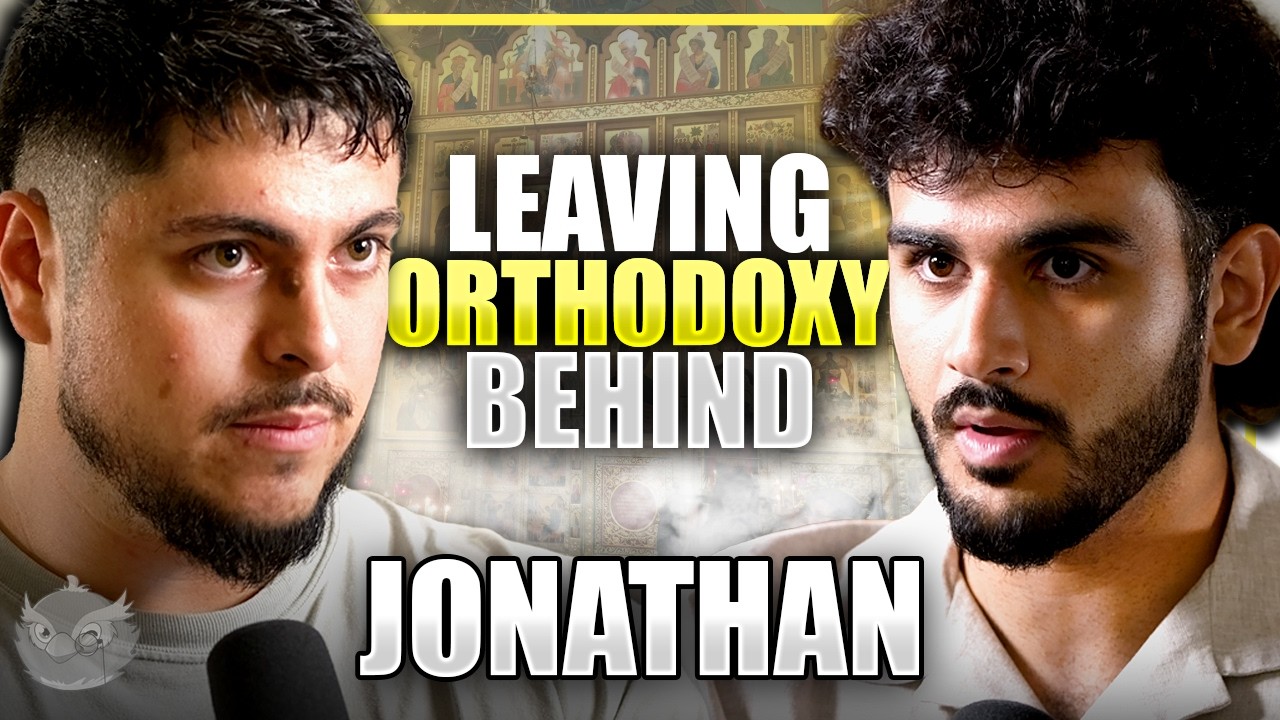 Watch the full interview on YouTube (50 min)
Key moments in the episode
- 1:17 Why he never really left the faith: “I was never truly invested in it”
- 3:10 Think and Grow Rich
- 5:42 Discovering Marcus Aurelius and the Stoics
- 8:00 The night his friends dared him to read the Gospels
- 11:58 Starting Roots of Orthodoxy
- 13:23 Answering the “biggest grifter” label
- 15:32 Why he chose the Catholic Church after three years
- 39:53 The pastor who said he could kill someone and still go to heaven
Get the next article first
One article for every new interview, plus the link to watch. Free.
Emmanuel Romanous hosts Lazy Intellectuals, a long-form interview show from Greater Phoenix featuring faith leaders, athletes, creators and Assyrian voices. More about Emmanuel →