 Lazy Intellectuals
Father Lazarus, the Coptic Priest Calling Two Ancient Churches Back Together: “Lord, We Desire to Be One”
“I started to beat my chest and say, God, forgive me. I don't know you yet.” The Coptic Orthodox Church and the Assyrian Church of the East have been apart for about 1,500 years. A priest from a small church in Long Beach wrote a proposal to end the split, and it reached the Assyrian patriarch. Over two conversations, he explained why he thinks it can be healed, and what the 21 martyrs taught him about his own heart.
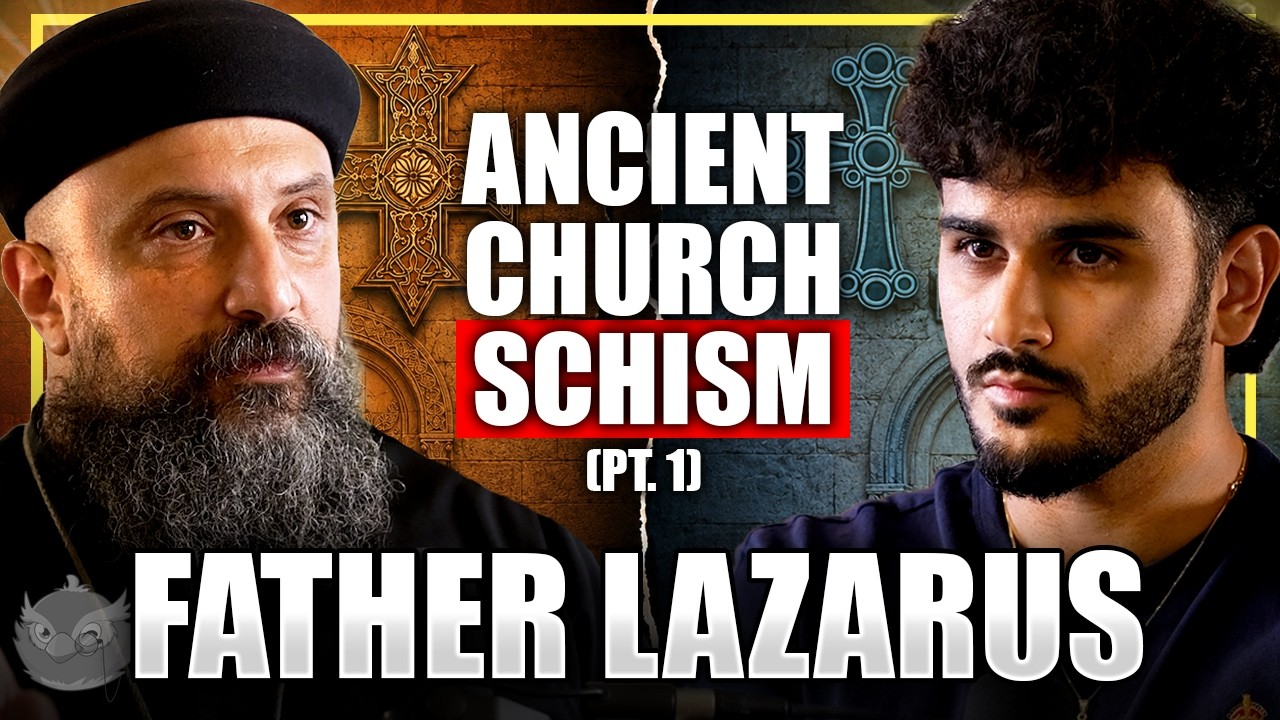
I opened with the question I most wanted answered. I belong to the Assyrian Church of the East. Father Lazarus is a priest of the Coptic Orthodox Church, with a background in clinical psychology and journalism. So: am I a heretic in the eyes of his church?
He did not dodge it. “We separate wrong teaching, heresy, versus calling a person a heretic,” he said, and he hesitates to do the second. The two churches would each consider the other's teaching to be in error. But he would not call me a heretic, any more than he would his Catholic friends. “God can work in any human being,” he said. What they do not share is the thing he wants most: full communion, at the same altar.
We recorded two conversations. The first was about the history that split our churches and a proposal he wrote to bring them back together. The second was about how a Christian should live in the world as it is.
One word, 1,500 years
The split runs back to the Council of Ephesus in 431 and a fight over what to call the Virgin Mary. Nestorius, the patriarch at the center of it, preferred Christotokos, the one who gave birth to Christ, over Theotokos, the one who gave birth to God. To the Copts, Father Lazarus explained, that was never just about Mary. It was “an attack on the person of Christ himself,” because it seemed to separate his divinity from his humanity. “When Christ wept, it's the God-man who wept,” he said. “When Christ was crucified, it's the God-man who was crucified.”
He was fair to Nestorius. “I believe with all my heart that Nestorius had great intentions,” he said. “I think unfortunately some heresies, many heresies, start off with very good intentions.” And he stressed that Nestorius never said Christ was two persons, a charge he called a false narrative. The statement he later read to me says plainly that the Assyrian Church of the East does not teach that Christ is two persons.
To explain the difference, he turned it into a question for me. Is a marriage a union of two people, or a union in two people? I answered without thinking. “That's the same thing in Christ,” he said. In his view, the obstacle left is not what our churches believe about Christ today. It is that the Assyrian Church of the East never condemned Nestorius and his teachings.
A statement that reached the patriarch
Before we filmed, Father Lazarus sent me a statement he had written and asked if I knew any theologians in the Church of the East. I sent it to the patriarch of our church. It intrigued him, and he encouraged me to have this conversation. Father Lazarus laughed when I reminded him. “I'm literally nothing, a little lowly priest in a little hole-in-the-wall church in Long Beach,” he said. “It's not humility. It's reality.”
He prayed before he read it on camera. The statement affirms the Nicene Creed and Christ as fully God and fully man, without mixture or separation, and condemns both dividing Christ into two persons and absorbing his humanity into his divinity. Some of it reads like a hymn: “He who wept tears is the one who waters all of creation.” It calls itself “a proposal for the union of the churches to declare one Lord, one faith, one baptism.” The two churches came close in a dialogue in the mid-1990s that collapsed by 1996. The Assyrian representative who argued on behalf of Nestorius in those talks has since been removed from our church, and with him gone, Father Lazarus sees “a clear path by God's grace.”
Why does it matter so much to him? He read me Isaiah 19, where Israel, Egypt and Assyria are named together as blessed. “Now we're going to fulfill prophecy,” he said. “That's what's at stake.” And unity, he said, is not something sentimental. “This is not a hunky-dory kind of, let's all sing songs and hold hands and say we're one. That's not unity. Unity means we can be at the same table, partake of the same body and blood of Jesus Christ together.”
He also warned me how hard his church can be to move. “We're very stubborn when it comes to our faith,” he said. “We'd wash your feet. We'd kiss your feet. But when it comes to our faith, go ahead and kill us. We'd rather die than compromise even the slightest way.” His hope is that young people in both churches start fasting and praying for unity every Wednesday and Friday until it happens.
“I started to beat my chest and say, God, forgive me. I don't know you yet.”— Father Lazarus
What the martyrs' wives taught him
In the second conversation, I asked whether every human life is worth the same, even the lives of the men who killed the 21 martyrs in Libya. He said yes. The proof that the martyrs held no hatred, he said, was the name on their lips at the end. “You can't have the name of Jesus on your breath and have hatred. You can't.”
Then he confessed something. When Egypt sent bombers against the ISIS bunkers in Libya, he cheered. “I was like, yes, yes, thank God. That's good,” he said. Then he heard the martyrs' wives interviewed. Asked what they wished for the men who killed their husbands, they answered: “We forgive them. We wish that they get to know Jesus.” That was when he beat his chest and asked God to forgive him.
Is God fair, then? “I don't think he's fair,” he said. “He's too kind. If he's fair, we shouldn't have salvation.” He would protect his family, he said, but he will never carry a firearm, so that he has to rely completely on God.
“The least glamorous job”
A friend of mine keeps his distance from Christianity because the hierarchy of popes, bishops and priests looks like control to him. Father Lazarus said my friend has not seen a good hierarch. “What brought me to Christ was a hierarch,” he said. He was 19 or 20, standing in a corner of his church because his mother made him go, when Pope Shenouda III visited with several bishops. One bishop walked up and hugged him like an old friend. “I kid you not, when I look at his face, there was a glow,” he said. “What does he have that I don't have?”
Being a priest, he said, is the least glamorous job there is. Everything that goes wrong in the church is his fault. People call him at two and three in the morning. He gets cussed out on a weekly basis. He called a priest who truly serves “a living martyr.” His parish serves people living on the streets, some of them actively using, and he refuses to condemn them. “My job is to show them Christ and to love them as Christ and call them to healing.”
Bitter and sweet
The Coptic Church reads the whole Book of Revelation once a year, in an all-night service before Easter morning. Is it terrifying? “It's terrifying if I'm not living with Christ,” he said. He sees new reasons for hope: his church, he said, has never baptized as many people as it did this past year, with people flocking to the ancient churches.
He ended with St. Paul in the Philippian jail, beaten, bleeding, chained, and singing. “Was that an act?” he asked. “That wasn't an act. It's the suffering and the joy at the same time.” That, he said, is the Christian life: “this bitter and sweet sweetness at the same time.”
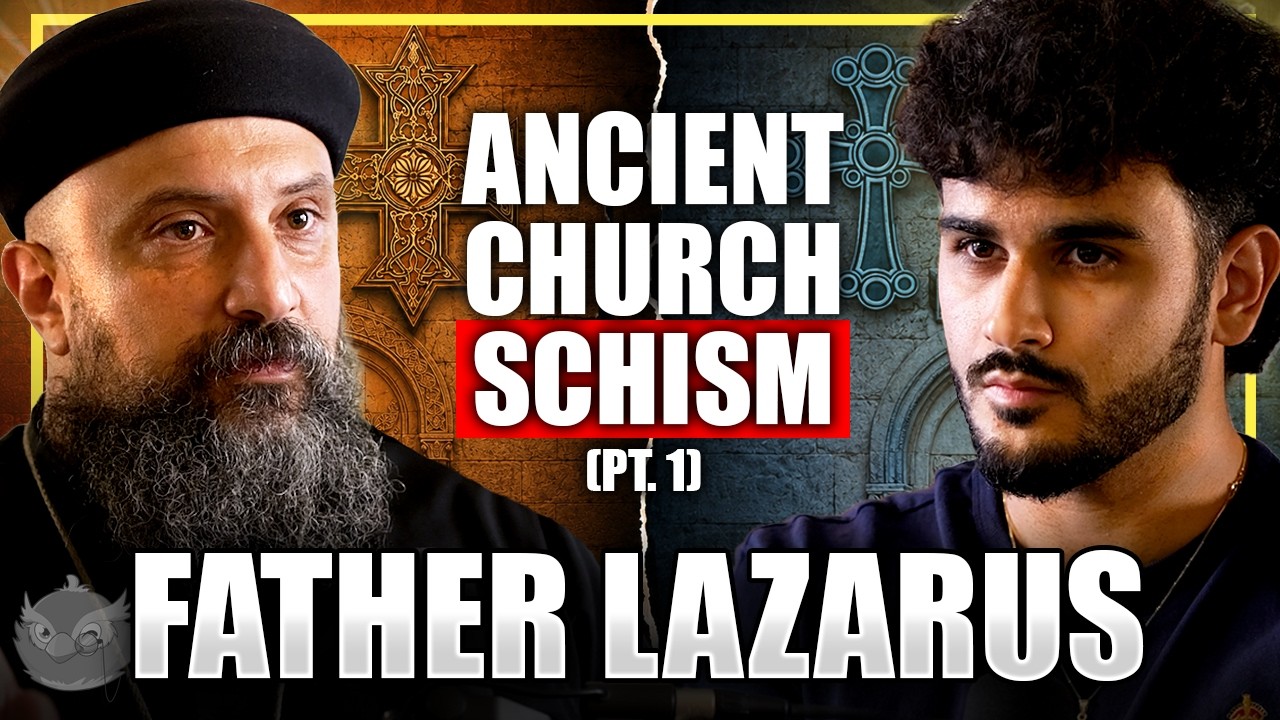 Watch the full interview on YouTube
Key moments in the episode
- 2:30 “Am I a heretic in the eyes of your church?”
- 4:03 The Council of Ephesus and Theotokos
- 22:22 A union of two people, or in two people?
- 23:49 Isaiah 19: Egypt and Assyria together
- 28:10 How the statement reached the patriarch
- 31:37 Father Lazarus reads the unity statement
- 39:16 What is lost if the churches stay divided
- 45:38 “We'd rather die than compromise”
Get the next article first
One article for every new interview, plus the link to watch. Free.
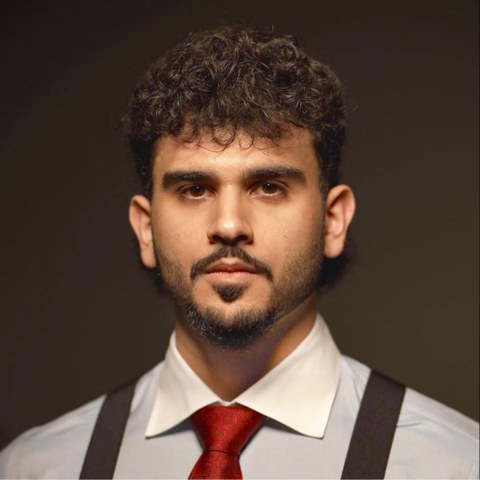
Emmanuel Romanous hosts Lazy Intellectuals, a long-form interview show from Greater Phoenix featuring faith leaders, athletes, creators and Assyrian voices. More about Emmanuel →