 Lazy Intellectuals
Voice of Reason, Roots of Orthodoxy and Ismail Youssef Return: “I Don't Think I Will Ever See Anything That Crazy in My Life”
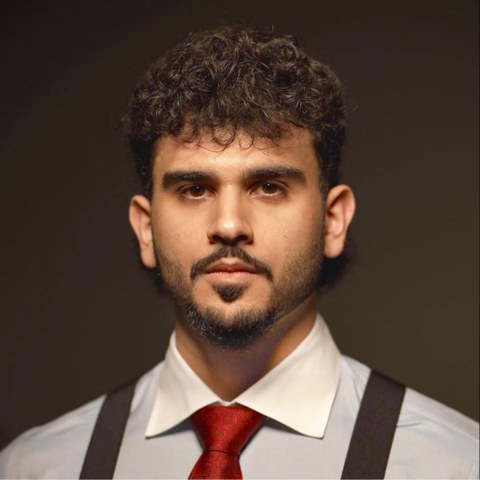
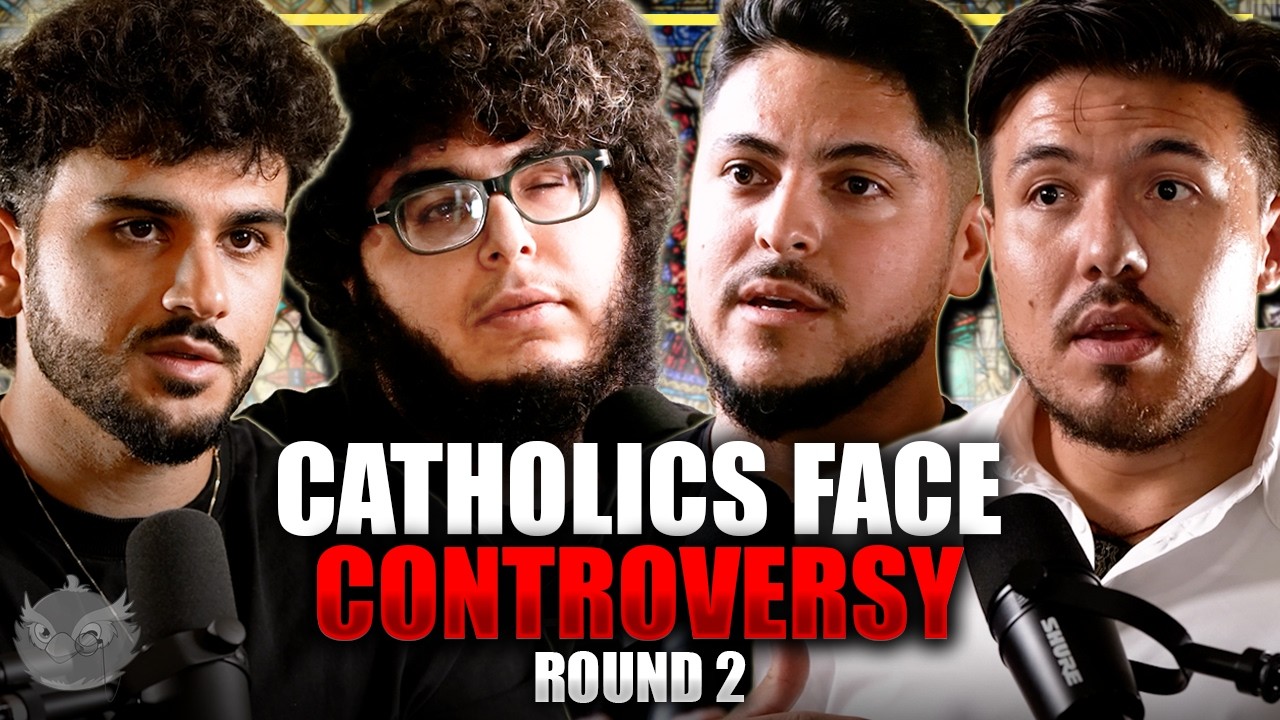
“In attempting to prove Eastern Orthodoxy to be true is when you realize that it's not. I was literally lying to myself.” Three Christian creators came back to Arizona to answer the comment section: who becomes a saint, whether babies should be baptized, and why two of them are fighting the “Orthobros” online. Then one of them described the three days he spent at an exorcism.
The woman had been taken to the hospital, and the hospital said there was nothing medically wrong with her. When her son came to bring her home, she started throwing everything in the room at him. A security guard came in to restrain her. “This little lady picked him up and threw him out of the room,” said Alex, the Catholic apologist known online as Voice of Reason. His friend had filmed it. It took every guard on the wing to strap her into a wheelchair.
Alex was on the sidewalk when they wheeled her out in her hospital gown. “They don't say a word to us,” he said. “They don't want to look me in the eye.” As they lifted her into the van to take her home, she tried to bite them. “I don't think I will ever see anything that crazy in my life,” he said. “It's like the movies. Her voice literally changed.”
That story came late in a long night. Alex, Jonathan of Roots of Orthodoxy and Ismail Youssef had come back to Arizona for a second roundtable, this time to answer the questions viewers left after the first one. It became the longest episode I have recorded.
How a saint is made
One question came from my own family: why doesn't the church just recognize a good man who has died as a saint? In one sense, the panel said, every baptized Christian is a saint; the word means one set apart for holiness. But the Catholic Church has formally canonized only about 10,000 people. The process starts from the ground up, with a community that asks a person for his prayers. “It's the veneration first,” one of the Catholics at the table explained, “and then the church will canonize them after miracles are verified.” Rome then investigates the person's life and tries to disprove the case. “They don't want frauds.”
The 21 Coptic martyrs killed by ISIS in Libya in 2015 came up. The Catholic Church recognized the Coptic Church's canonization of them. Two of the panelists had recently visited the martyrs' shrine in Egypt and met some of their wives. One of the martyrs, the panel noted, was not baptized and had not been a Christian. He is honored because he chose to die with the others, a baptism of blood. Told they would be killed that day, one panelist said, “the first thing they did was sing songs.”
Born of water and spirit
Is baptism required for salvation? “Ordinarily, yes,” came the answer. “But it's not an absolute necessity.” God can give extraordinary grace, but only baptism lets a person know. The Catholics leaned on John 3:5, where Jesus says one must be born of water and spirit, and on Colossians 2, where Paul calls baptism the new circumcision. Under the old covenant, they argued, infants were circumcised. If the new covenant is more inclusive, why would baptism be more exclusive than circumcision?
On the papacy, they argued from Matthew 16, Luke 22 and John 21 that Christ left Peter in charge of the church, and that the office was meant to continue. The Pope, one panelist said, carries a title many people have never heard: “the servant of the servants of God.”
“In attempting to prove Eastern Orthodoxy to be true is when you realize that it's not. I was literally lying to myself.”— Jonathan, Roots of Orthodoxy
The Orthobros
Then the question many viewers wanted asked: why are Alex and Jonathan on a crusade against Eastern Orthodoxy? “We're not on a crusade against Eastern Orthodoxy,” came the reply. “We're trying to end the schism.” The Orthodox priests they have met are “some of the most beautiful, holiest men,” they said. The fight is with people online. “They're the ones that try to bully us. We just defend ourselves from their bullying.”
Their case against Orthodox unity is the split between Moscow and Constantinople over the church in Ukraine. They said Moscow broke communion with Constantinople and set up a rival patriarchate in Alexandria. They also pointed to divorce and remarriage, which some Orthodox churches allow up to three times, and which they say every pre-Nicene church father who wrote on it called adultery.
Jonathan, who helped bring many Americans to Orthodoxy, says he went in wanting it to be true. “I was a sincere inquirer,” he said. He thought the papacy was a grab for power. “I'm a big conspiracy theorist at heart,” he said. Then he studied the history. “It's actually the opposite.” Alex remembers the two of them arguing through Jonathan's two and a half years of study, sometimes in front of a priest they both love. Jonathan's verdict on that period: “I was literally lying to myself.”
Thirty seconds in another language
When I asked about speaking in tongues, Ismail had a story. He used to think it was nonsense. Then, at a gathering with a community of charismatic Catholic priests, someone suggested they all pray for the gift. He closed his eyes in the pews and prayed: “God, I think this is absolutely cap, but if it is, nothing's going to happen. But if it isn't, then give me a language.” Then he spoke, in what he says was a different language. “I wasn't speaking,” he said. “It was someone else speaking.” It lasted about 30 seconds. He was conscious the whole time. “I could have stopped myself. I just let it happen.” It never happened again.
Alex said the deacon at the parish he grew up in prays in tongues, but quietly, “never in the liturgy, never during the Mass.” The gift as the Bible describes it, he said, is the one missionaries like St. Francis Xavier were said to have, speaking the language of the people they reached. As an Assyrian, I offered my own reading. At Babel, people tried to make themselves God and stopped understanding each other. At Pentecost, people from every nation understood each other again. “When you remove God from the equation and make yourself God,” I said, “you stop understanding each other.”
Three days
That deacon is how we got to the exorcism. It happened in 2021, during the pandemic. The woman was the mother of one of Alex's closest friends, a man then weeks away from being baptized Catholic, with Alex as his godfather. Her family was Protestant, and Alex was the only Catholic in the room as Pentecostal, charismatic and evangelical believers came and went, praying over her. His friend kept telling them, “We need someone with authority. You don't have authority.” Alex says they made it worse.
Was he scared? No, he said. “You kind of go into autopilot mode.” Only afterward did the exhaustion hit. In the end, a Catholic priest and the deacon were let in, and with the friend's aunt, the only Catholic in the family, they prayed until she was freed. The whole ordeal took about three days. Afterward, Alex said, she admitted she had been practicing witchcraft against relatives, and the family burned the hex dolls she had hidden around the house. People who have been hurt, he said, “do crazy things to try to get back at the people that hurt them.” “This was long before I was Voice of Reason,” he added.
We ended on something gentler. I admitted I had prayed to my guardian angel for the first time only a week before, asking for help against intrusive thoughts. The next day, I told them, “I felt an intrusive thought coming upon me. It didn't manifest. I felt it get deflected.” A few days later, I forgot to ask, and the thoughts came back. “This is why you have to keep re-upping your ammunition,” I said. We closed the night by praying a prayer to our guardian angels together. We have promised a part three.
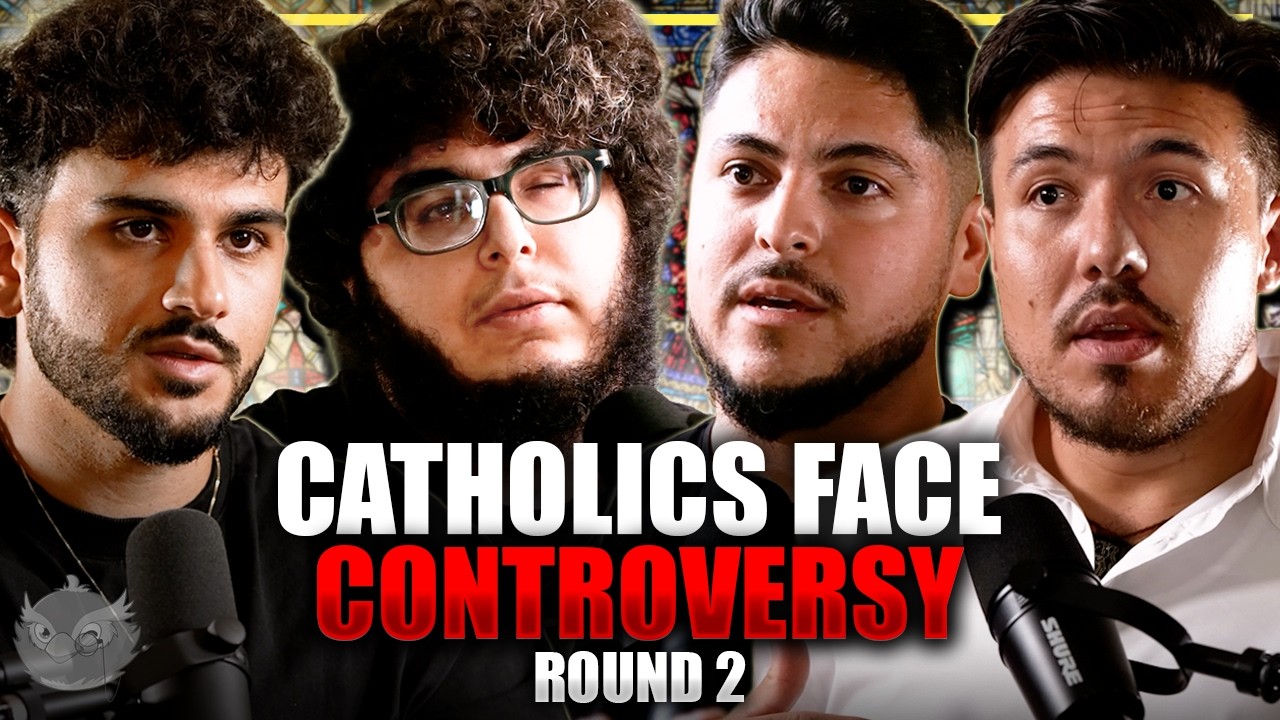 Watch the full interview on YouTube (1 hr 38 min)
Key moments in the episode
- 2:14 Can anyone become a saint?
- 4:43 How the Catholic Church canonizes saints
- 15:09 The Coptic martyrs of Libya and baptism of blood
- 19:07 Charlie Kirk, saints and praying to the dead
- 22:49 Is baptism required for salvation?
- 31:26 Is baptizing a baby against their will?
- 39:46 Is the papacy necessary for salvation?
- 53:13 The Russian–Greek Orthodox schism
Get the next article first
One article for every new interview, plus the link to watch. Free.
Emmanuel Romanous hosts Lazy Intellectuals, a long-form interview show from Greater Phoenix featuring faith leaders, athletes, creators and Assyrian voices. More about Emmanuel →