 Lazy Intellectuals
Chris Willingham, the Marine Who Went to War With K-9 Lucca: “She Was Fearless”
“My job is to look out for the canine. Her capabilities are going to protect my life.” For years, a German shepherd–Belgian Malinois mix led American patrols down roads laced with bombs in Iraq and Afghanistan. Her handler told Lazy Intellectuals about the bomb she found that would have taken out half his squad, the friend he lost, and the day she lost a leg.
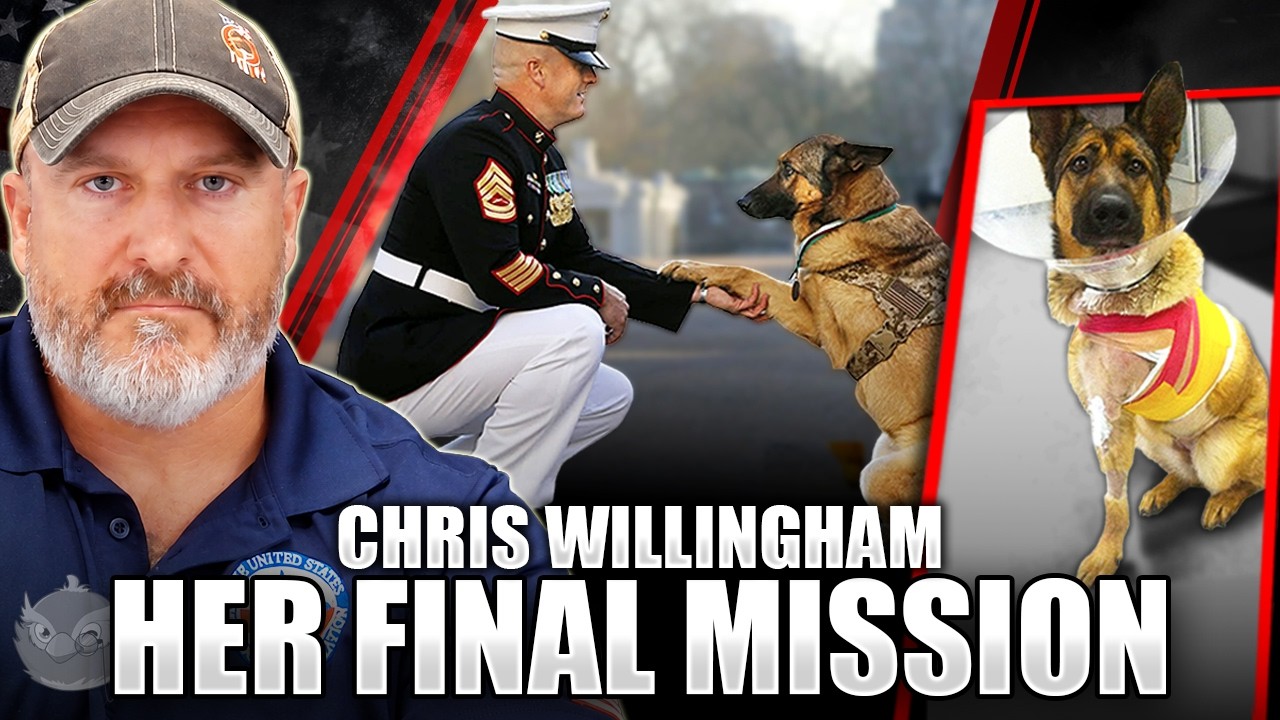
The road south of Baghdad narrowed in places, and those narrow places, choke points, were where the bombs tended to be. Chris Willingham sent Lucca ahead off leash through the first two. Nothing. At the third, he saw what he had been trained for years to see: her sniffing grew more intense, her tail started going, and she slowed into a more methodical search. “That's all I needed,” he said. He called her back.
The team set off a water charge to clear away the top layer of dirt. Instead, the bomb underneath went off. It was made of homemade explosives, which were new on the battlefield then and very volatile. It left a crater about five feet deep and about 12 feet wide, and the bomb technicians estimated about 30 pounds of explosive. Willingham says it would have taken out half his squad. “That was the first validation moment of all the blood, sweat and tears we put in,” he said. It was the first time Lucca saved his life.
Paid to play with dogs
Willingham grew up in Tuscaloosa, Alabama. Both of his grandfathers served in the Army in World War II, and his father was a Marine machine gunner in Vietnam. He planned to do four years in the Marine Corps, then go home and work alongside his dad in law enforcement. Then came 9/11, and a roommate who happened to be a dog handler. Willingham walked down to the kennels and could not believe it. “You get paid to play with dogs?” he remembers thinking. “This is pretty gnarly, man.” He served 20 years, much of it as a handler and kennel master.
The work mattered more than most people know. Willingham pointed to the Joint IED Defeat Organization, a task force that spent six years and some $19 billion looking for the best way to counter roadside bombs. “When the dust settled,” he said, “the best countermeasure was a well-trained dog team.”
“She's another one of my Marines”
He was paired with Lucca when she was just under two years old, for a specialized program that trained dogs to search off leash, far ahead of their handlers. The two of them spent about nine months learning from Israeli trainers. Anyone can see a dog sit down when it finds something, he explained. A handler's real job is to catch everything before that. “You're looking for the change of behavior in your dog's baseline of sniffing behavior,” he said.
On night raids, Lucca wore an infrared light and two radios on her harness so Willingham could whisper commands from far behind. In training he could push her 400 or 500 meters with good control. Insurgents knew what the dogs could do and put bounties on them. Willingham never thought of her as equipment. “My job is to look out for the canine,” he said. “Her capabilities are going to protect my life.” And then: “She's another one of my Marines.”
The bond, he said, comes quickly, and then comes a moment every handler knows. “There's a moment of synergy where you just really sink into each other,” he said. In Iraq they were together seven days a week, sleeping on cots and in the backs of vehicles. During one attack he returned fire from a rooftop while Lucca sat safe behind the wall, and he talked to her the whole time, praising her the way he had a thousand times in training. Did she ever show fear? “Never,” he said. “She was fearless.”
“My job is to look out for the canine. Her capabilities are going to protect my life.”— Chris Willingham
Kory and Cooper
Not every story ended well. On July 6, 2007, a handler Willingham was responsible for, Kory Wiens, was killed with his dog, Cooper, by a large bomb that insurgents set off on command. The last place Willingham had seen him was Patrol Base Murray. He helped carry the fallen off the battlefield to a waiting helicopter. “That's a lot to process,” he said. “At that point, I didn't value life a whole lot.”
After that he volunteered for every mission he could. “I just didn't want to lose another guy,” he said. “So I would rather take the risk myself. And I know it's not the right answer, and it's not healthy.” He turned down a chance to go home for the birth of his daughter, and met her for the first time at the airport when he got back. He did not tell his wife about that choice until years later, while the author of his book was staying with them. Her answer, he said, was nothing but love: “You were a different person back then.”
He still talks with Kory's father. About ten years ago the family raised a litter of Labs in honor of Kory and Cooper and offered Willingham one. He is a big, goofy yellow Lab named Murray, after the patrol base, and he spent his first couple of years alongside Lucca.
Her last patrol
When Willingham moved on, he got to choose Lucca's next handler: Juan Rodriguez, a Marine he had served with in Afghanistan in 2010. On March 23, 2012, Rodriguez and Lucca were with a Special Forces team in Afghanistan, leaving a tree line toward a compound. Lucca found a bomb. Following protocol, Rodriguez began searching for the second device that so often lay nearby, and a small pressure bomb, the kind troops called a toe popper, went off under Lucca. It destroyed her front left paw.
Rodriguez ran to her, applied pressure and carried her back to the tree line, where the team's medic went to work. She was flown out the same way a wounded service member would be. Veterinarians removed the leg. She was walking within ten days. “She was the same Lucca she was before,” Willingham said. Asked why she missed the second bomb, he did not hesitate: “These dogs are absolutely proven, but they're not perfect.” Rodriguez's quick reaction, he said, saved her life.
Lucca was cleared for retirement, and Rodriguez insisted she go home to Willingham, who by then was posted at the U.S. embassy in Helsinki, Finland. The ambassador got involved, and Rodriguez flew with her. After that, Willingham joked, it was joint custody.
Keeping her legacy alive
Lucca lived to just shy of 14, trading combat patrols for family walks. When her health failed, Willingham called Rodriguez, who came out to be with them. “We both had a hand on her when she took her last breath,” he said. Her harness, radios and gear are now on display at the National Museum of the Marine Corps, where she represents military working dogs in the wing for Iraq and Afghanistan.
Willingham now runs the U.S. War Dog Association, which was started by five Vietnam dog handlers. Their generation, he said, saw only about 200 of roughly 4,000 dogs come home. Their advocacy is part of why handlers can now adopt their dogs. I asked him about Tuffy, a pup that American soldiers hiding in a cellar during the Battle of the Bulge reportedly smothered to keep their position secret. For a trained war dog, he could not do it. “I'd take my chances,” he said.
The grief, he said, has softened with time. “The pain of loss faded. It took a while, but it faded.” What is left is the work of telling her story, and of keeping Kory and Cooper's names alive with hers. “It's good for my soul,” he said. “It's therapy for me.”
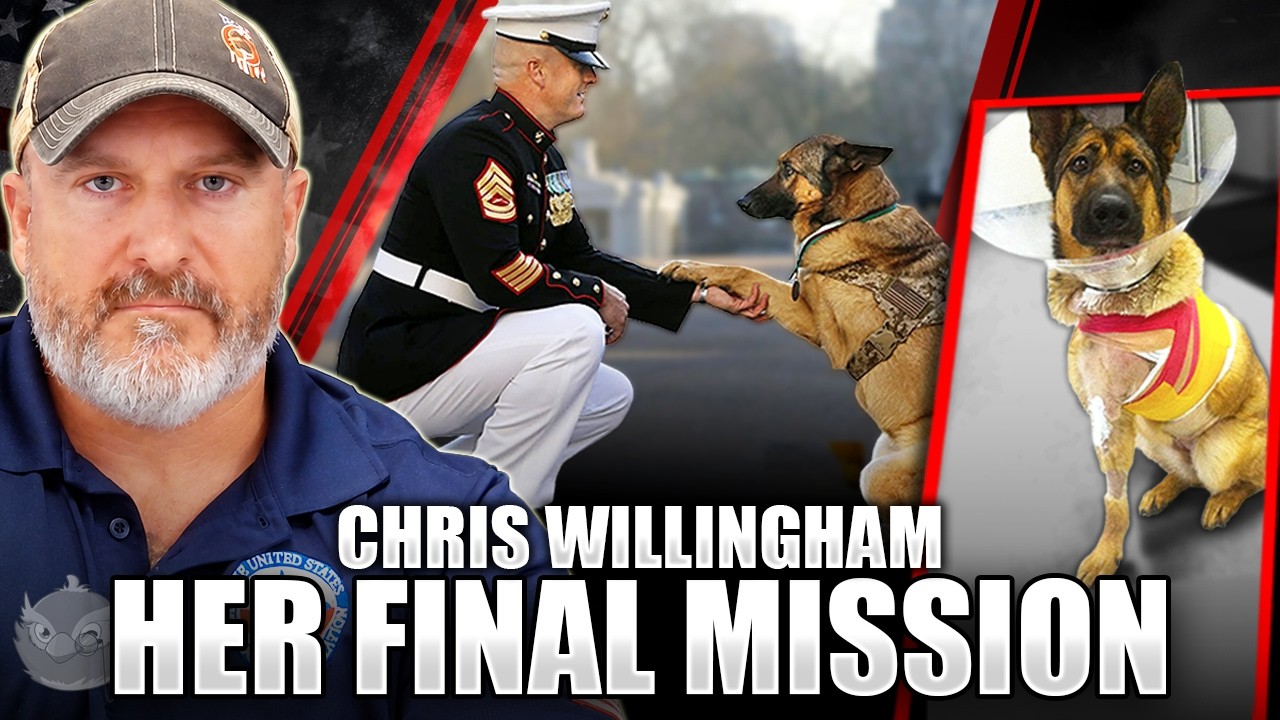 Watch the full interview on YouTube (1 hr 8 min)
Key moments in the episode
- 1:31 Growing up in Tuscaloosa and joining the Marines
- 3:48 Why the best counter to roadside bombs was a dog
- 5:51 What a bomb dog actually smells, and how a handler reads her
- 13:35 Cut off from his platoon on the Tigris River
- 20:31 How fast the bond between handler and dog forms
- 25:35 Whispering commands through a radio on Lucca's harness
- 28:37 Losing Kory Wiens and Cooper
- 41:55 The World War II story of Tuffy
Get the next article first
One article for every new interview, plus the link to watch. Free.
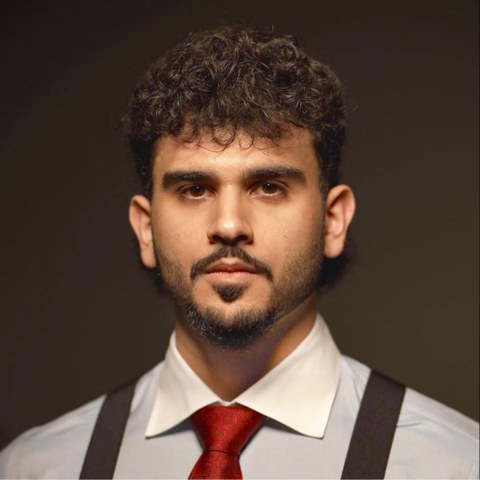
Emmanuel Romanous hosts Lazy Intellectuals, a long-form interview show from Greater Phoenix featuring faith leaders, athletes, creators and Assyrian voices. More about Emmanuel →